
Cello Setup 101: Bridge, Nut, and String Height Explained
A cello can be beautifully made and still be nearly impossible to play if it is not set up properly. Setup refers to the physical adjustments that make an instrument comfortable, responsive, and sounding its best. It includes the bridge height and position, the string clearance over the fingerboard, and soundpost location. This cello setup guide walks through each of these elements so you know what a well-adjusted instrument looks like and what can be done when something feels off.
This is one area where a specialist shop like Metzler Violin Shop has a clear advantage over buying from a large online retailer. When you purchase a cello from us, it leaves our Glendale shop set up and ready to play. When it ships from a warehouse, you get whatever condition it arrived in off the assembly line.
What Is a Cello Setup and Why Does It Matter?
Setup matters because with string instruments, even small misalignments create big problems. A bridge that is even 1 millimeter out of position changes how the instrument vibrates and can cause "wolf notes" (a strange sound effect which is a byproduct of an overproduction of resonance) or a tone that is thin, nasal, or dull.
Strings set too high off the fingerboard make playing physically painful. This is one of the most common reasons students think the cello is hard, when really they are fighting a poorly set up instrument.
Good setup matters most for students. Teachers spend their first lessons building good habits. If a student is straining to press strings down, those habits form around compensating for the instrument rather than developing proper technique.
Adjusting bridge height means carving the bridge, which should only be done by a luthier.
How to Set Up a Cello: The Bridge
The bridge is the carved maple piece that holds the strings up and transmits vibration to the top of the instrument. It is held in place entirely by string tension, not glue.
Bridge Position
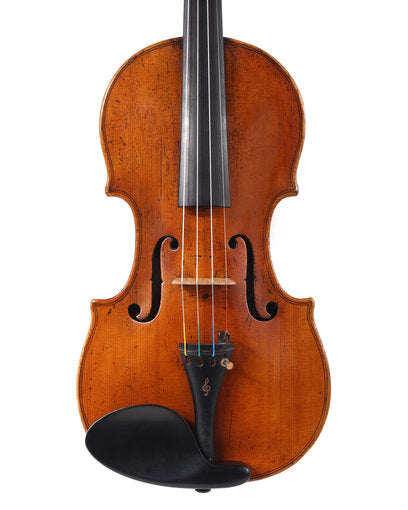
The bridge should sit with its feet centered between the two notches inside the f-holes. The flat back of the bridge should be perpendicular to the top of the instrument, not leaning forward or backward. This is a good starting point for determining the location of the bridge, but there may be an optimal sounding location which is actually not perfectly centered. If there is something "off-sounding" on your instrument, or an excessive wolf note, you may consider bringing the instrument to us.
These issues can be addressed via a sound adjustment, which is a service offered by our workshop. The sound adjustment may take a few days, and involves leaving the instrument with us for the luthier to spend time experimenting with very small adjustments to the bridge and soundpost locations, until the instrument's optimal voice is found. Instruments purchased from us should be recently adjusted, though we will often adjust them one more time before you take it home.
A bridge leaning toward the fingerboard is a common, but easily fixable problem. It happens gradually as string tension pulls it. Left too long, the bridge warps into a permanently bent position. Check yours every few months by looking from the side, and confirming that the bridge is standing upright.
Cello Strings: How They Affect Setup Feel
The strings themselves play a big role in how setup feels in practice. High-tension strings pull harder on the bridge and increase downforce on the fingerboard. Lighter strings feel more forgiving on a student instrument.
A few reliable options we carry at Metzler:
- Larsen cello strings: Warm tone, popular with students and professionals alike
- Thomastik-Infeld cello strings: Flexible, easy on the fingers, great for beginners
- D'Addario cello strings: Consistent, affordable, widely trusted for student instruments
-
Pirastro cello strings: Rich and full-sounding, used by many advancing students

If your cello came with factory strings and feels stiff or dead, a string change is often the fastest improvement you can make without touching anything else.
Nut Height
The nut is the small piece at the top of the fingerboard where strings pass before reaching the pegs. If strings are cut too deep, they buzz in first position. If they sit too high, the string height will be uncomfortable. This requires a professional to adjust.
Soundpost
Inside the cello, a small wooden dowel called the soundpost sits just behind the treble foot of the bridge. It transmits vibration between the top and back plates and has an important effect on tone. A shifted soundpost changes the sound dramatically. If your cello suddenly sounds hollow or thin after a drop or humidity change, the soundpost may have moved. This adjustment should only be done by a luthier.
Protecting Your Setup Long-Term
Humidity changes are one of the biggest threats to a well-adjusted cello. Wood expands and contracts with moisture, which can shift the bridge, open seams, and even affect the soundpost. A humidifier inside your cello case helps keep humidity stable, especially during dry winter months.
A properly fitted case also matters. We carry a range of cello cases and cello bags for different levels of protection and portability.
When to Come In for a Professional Setup Check
Signs your instrument is due for a setup checkup:
- Strings feel stiff or sit too high in first position
- Buzzing or rattling on certain notes
- Bridge is leaning visibly forward
- The instrument dropped or was in extreme temperatures
- You purchased it online and it has never been professionally adjusted
At Metzler Violin Shop, setup and adjustment are part of what we do for every instrument we sell. If you bought your cello elsewhere and are not sure about its condition, bring it in. We are happy to take a look.
Browse our full-size cellos and student cellos online, and call us at 818-246-0278 to book an appointment.