Collection: Violin Shoulder Rests

35 products

Violin Shoulder Rests Collection: Complete Guide to Choosing the Perfect Shoulder Rest

Finding the right support can transform your comfort, tone, and confidence—especially when you’re practicing for hours. This Violin Shoulder Rests Collection - Complete Guide to Choosing the Perfect Shoulder Rest is designed to help you understand what a violin shoulder rest actually does, how to match one to your body and instrument, and which styles suit beginners through professionals. 

Why a Violin Shoulder Rest Matters

A shoulder rest is an important component of finding comfort while playing.. The right rest helps you:

  • Maintain a stable hold without clenching your jaw or lifting your shoulder.
  • Reduce neck/shoulder tension during long rehearsals.
  • Improve shifting and vibrato by freeing the left hand from supporting the instrument.
  • Keep consistent contact points, which can stabilize intonation and bow control.

That said, no single model is perfect for everyone. The “best” option depends on your neck length, shoulder slope, collarbone shape, and chinrest height..

Key Fit Factors: How to Choose the Right Shoulder Rest

Before comparing brands, focus on fit. Most problems (slipping, pain, restricted vibrato) come from a mismatch in height, shape, or placement.

1) Height: Neck length + chinrest combination

Your shoulder rest height must work together with your chinrest height. If the rest is too low, you may  clamp down with your jaw. If it’s too high, you may feel jammed, limiting your mobility and freedom of expression while playing.. Whether your neck is particularly long or short, there is a corresponding shoulder rest model to support you. 

2) Stability: Grip without over-tightening

Does your shoulder rest shift or fall off while you’re playing? We hate that, too. If you’re dealing with this issue, consider:

  • Different rubber feet (or replacing worn feet)* 
  • A model with a wider footprint
  • Adjusting placement of your shoulder rest (It doesn’t need to be placed directly horizontally across the violin - try angling the rest diagonally to bring it closer to your neck!)
  • Tightening your shoulder rest (The most standard shoulder rest design can be adjusted inward to clamp your instrument more tightly.)

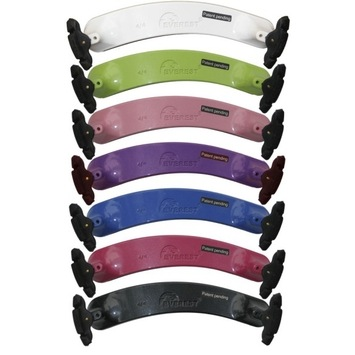
*Note - Most replacement chinrest feet only fit the brand they were designed for. For instance, Artino, Kun, Pedi, and Everest feet are unfortunately not interchangeable.

3) Freedom of movement: Vibrato and shifting

Counterintuitively, “more locked in” isn’t always better. Many players want secure contact while still allowing subtle instrument motion for expressive vibrato and smooth position changes.

Types of Violin Shoulder Rests (and Who They’re For)

Rigid, adjustable frame rests

This category  is the most common. These shoulder rests are popular because they’re typically quite stable, and the most adjustable.. They’re a great starting point for students and advancing players who need consistency and durability.

Collapsible frame rests

If you commute, fly, or carry a compact case, a foldable design is a big advantage. A collapsible rest should still feel solid and quiet (no rattles) when locked in. 

Foam/sponge pad solutions

We generally recommend these first for young students just getting started. Some children are initially uncomfortable with the rigid structure of a shoulder rest under their chin. A soft foam pad gives them a gentle, squishy alternative.

These are not only for children, however – there are some (adult!) members of our staff who prefer this option as wel. Some sculpted foam models such as the Poly Pad offer some of the tallest lifts of any shoulder rest.


Spotlight: Popular Options in Our Collection

Classic: The Kun Original

Consider it if you:

  • Want a dependable, “standard” shoulder rest violin feel

  • Prefer straightforward adjustments without a learning curve

  • Want the same shoulder rest your grandma might have used (it’s a classic for a reason!)

If the classic doesn’t fit in your case, consider the Kun Collapsible.

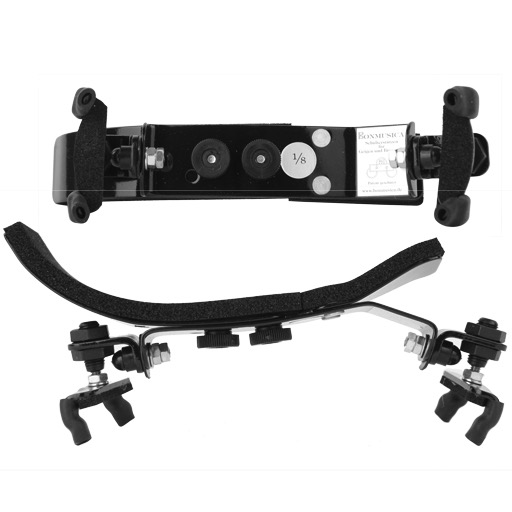
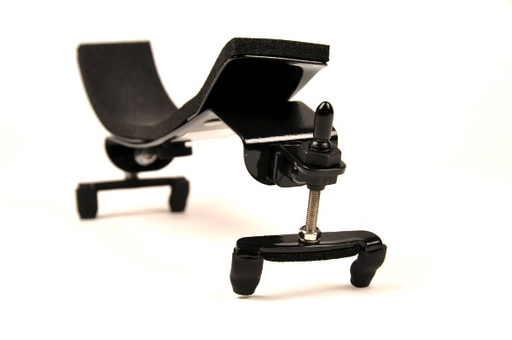
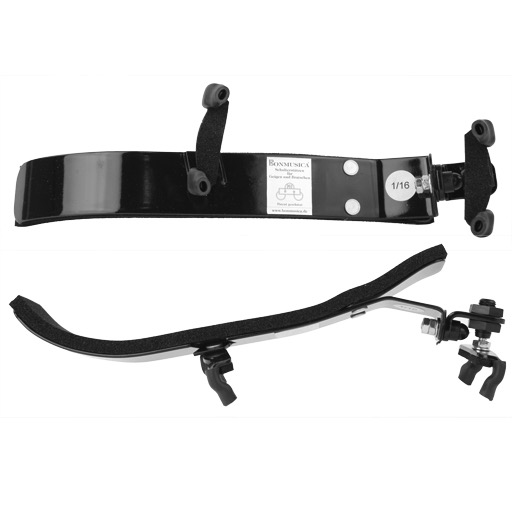
Customizable: Bonmusica

The Bonmusica shoulder rest is known for its bendable metal frame and secure, contoured feel. It’s a strong choice if you:

  • Need a very specific fit (unusual shoulder slope, long neck, or asymmetry)
  • Want a stable hold that still feels tailored
  • Prefer a rest that can be shaped to your body
  • Have a long neck - the included feet can get very tall
  • Deal with a tendency for your violin to slip away from you. The significant curvature does an excellent job holding the violin in a set place.

Because it’s so adjustable, it can take a little time to dial in—but once fitted, many players find it exceptionally secure.

Premium: KorfkerRest

If you’re chasing maximum comfort with minimal weight, KorfkerRest is a top-tier option. It’s designed to be highly adjustable while staying extremely light.For keen eared players, these rests have also been shown to add a few decibels of volume to their violin’s sound. It also happens to be the most expensive shoulder rest we’ve ever carried by a significant margin, but it’s growing popularity speaks for itself – it really is that good

Consider this shoulder rest if you:

  • Play for many hours a week and want less load on the shoulder
  • Like premium materials and refined fit options
  • Want a “barely there” feeling without giving up support
  • Want to maximize the sound from your instrument
  • Think it looks as beautiful as we do!

Poly-Pad: Simple, flexible cushion support

The Poly-Pad sponge shoulder rest is our sponge-style shoulder rest of choice. Many players choose a polypad shoulder rest when they:

  • Dislike rigid shoulder rest frames
  • Prefer a softer contact point on the collarbone/shoulder
  • Want a lightweight, easy-to-use setup

How to Fit a Shoulder Rest Correctly (Step-by-Step)

Even the best violin shoulder rest can feel wrong if it’s not adjusted well. Use this process to set up your violin shoulder rest properly.

  1. Start neutral: Set both feet to a medium height and center the rest on the back of the violin.
  2. Place it consistently: Most players position the rest slightly toward the chinrest side to meet the collarbone more naturally.
  3. Check head pressure: Bring the violin up and rest your jaw gently. If you have to press down to hold it, increase height or adjust your chinrest setup.
  4. Test left-hand freedom: Try slow shifts and vibrato. Your hand should feel free—your neck and shoulder should not be “pinning” the instrument aggressively.
  5. Confirm stability with movement: Play open strings, then fast bow strokes. If the violin slides, adjust placement or try a model with different grip/shape.

Tip: Re-check after a week. Your body adapts; small tweaks often make a big difference.

Common Problems (and Quick Fixes)

“My shoulder rest slips.”

  • Make sure the feet are not sitting on the violin’s edge/rib corner awkwardly.
  • Replace worn rubber feet.
  • Try a wider or more contoured model for your shoulder shape.

“My neck hurts after 15 minutes.”

  • Revisit height: too low causes jaw clamping; too high causes compression.
  • Check chinrest pairing—sometimes the fix is a different chinrest, not a taller rest.
  • Consider a softer-contact option (pad style) if pressure points are the issue.

“It feels secure but my vibrato is tight.”

  • Lower the rest slightly or reduce how aggressively it locks in.
  • Shift the rest’s position to allow more natural instrument movement.

“Something on the violin is irritating my skin or collarbone”

  • If your violin is sitting uncomfortably on your collarbone, you might try a narrower setting of the shoulder rest, which can allow it to perch closer to the bottom of your instrument. This can help prevent the violin from jutting out enough to make contact with the collarbone.
  • If your neck is getting irritated by the hardware from your chinrest, we recommend these comfy self-adhesive latex pads which cover the hardware. 

Don’t Forget the Bigger Setup: Accessories That Improve Comfort

Your shoulder rest is part of a complete comfort system. Case-friendly tools, cleaning items, and setup helpers can make daily playing easier. Explore our full range of violin accessories to round out your setup.

And if you’re shopping for a larger instrument, note that viola sizing and ergonomics differ—browse our dedicated viola shoulder rests..

How to Choose the Best Violin Shoulder Rest for You (Quick Checklist)

  • Comfort first: No sharp pressure points on collarbone or shoulder.
  • Balanced height: Jaw rests gently with no clamping.
  • Stable but not rigid: Secure hold without restricting technique.
  • Fits your lifestyle: Collapsible if you travel; premium lightweight if you practice long hours.

Shop Our Violin Shoulder Rests Collection

Ready to upgrade your comfort and confidence? Explore our curated selection of violin shoulder rests and find the setup that fits your body, your instrument, and your playing goals. whether that’s a customizable Bonmusica shoulder rest, a travel-ready Kun Collapsible shoulder rest, a premium KorfkerRest, or a simple Poly-Pad sponge shoulder rest. Choose your next violin shoulder rest today and make every practice session feel easier.